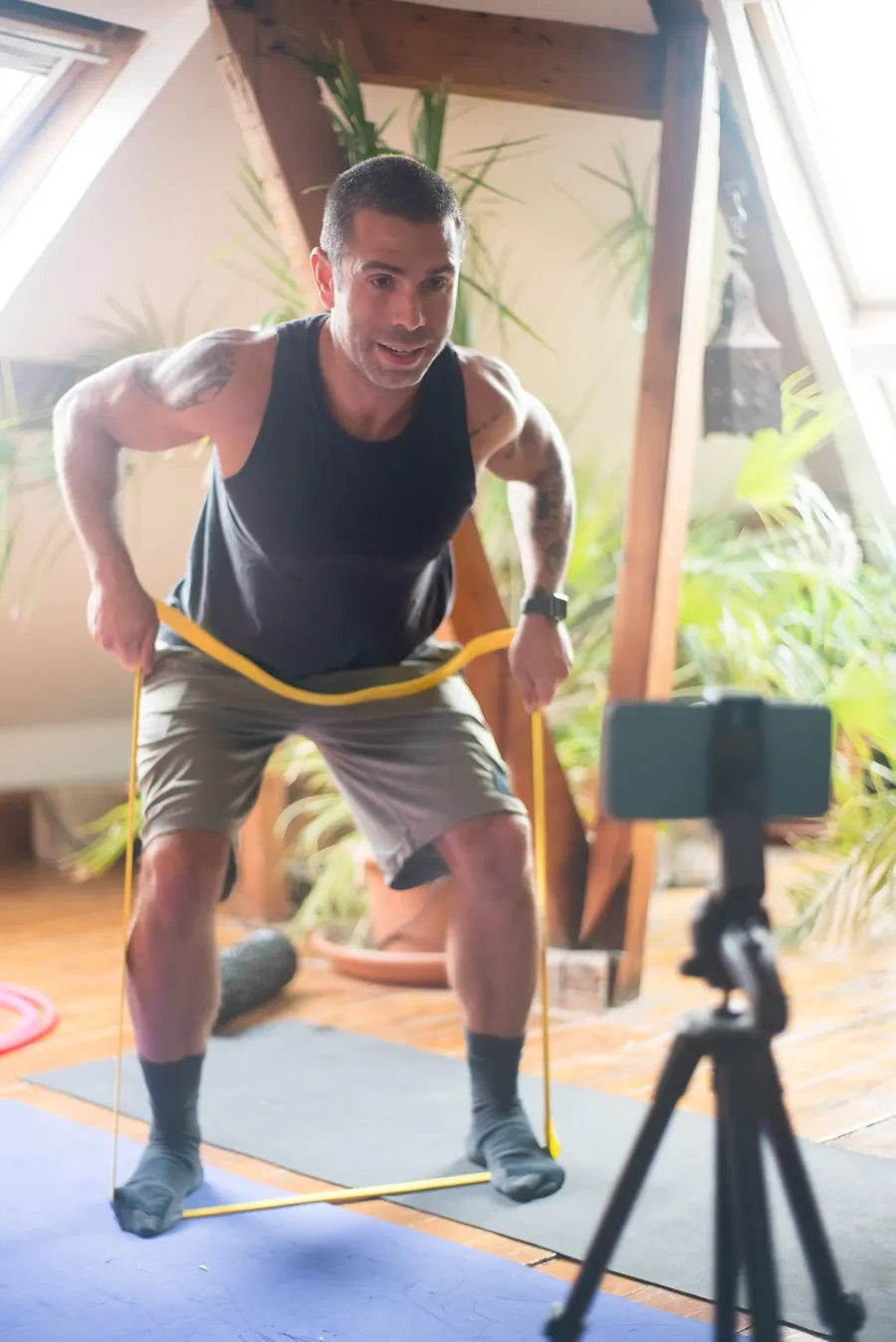
This guide covers what to sort out, in the order it matters: your credential, what you can and cannot advise on, who you coach, what you sell, the business basics, the system you run it on, and your first clients.
01
Get a recognized certification
The US Bureau of Labor Statistics notes that personal trainers usually must be certified before they work with clients, and that employers usually prefer certified trainers. Online, there is no gym checking your credentials, so your certification is how you show clients you are qualified.
When choosing a general personal-trainer credential, look for a certification accredited by the National Commission for Certifying Agencies (NCCA) or compliant with ISO 17024. The US Registry of Exercise Professionals (USREPS) lists NCCA accredited personal trainer certifications from its member organizations, including ACE, ACSM, NCCPT, NCSF and NSCA.
The BLS also notes that most trainers need CPR, first aid and AED certification. Keep yours current, even if every client is remote.
02
Know your scope before your first client
Online clients can live anywhere, which makes scope more important, not less.
Nutrition. Personal trainers can generally provide general nutrition education related to training and healthy eating within their qualifications. Medical nutrition therapy or individualized treatment of a medical condition is outside an ordinary personal trainer’s scope unless the trainer is separately qualified and legally authorized to provide it. State laws vary, so check the rules where you provide services and where the client is located when you provide them.
Pain, injury and illness. Personal trainers do not diagnose or treat injuries or medical conditions unless they hold separate qualifications that legally authorize them to do so. Stop an exercise if it causes pain. If pain or another symptom is severe, worsening, unexplained, outside your scope, or you are unsure whether exercise should continue, refer the client to an appropriate medical professional before continuing the affected activity.
Health screening. Have every new client complete a health screening before you program for them. One widely used tool is the PAR-Q+, a readiness questionnaire. If a client answers yes to its follow-up questions, the tool may direct them to further screening, a qualified exercise professional or their health care provider. Follow the tool’s next-step guidance and obtain any clearance it calls for before exercise.
03
Decide who you coach
A niche makes everything after this easier: programs, marketing and referrals. Describe it as who, what goal and what setting. For example: parents training at home with dumbbells, or lifters preparing for their first powerlifting meet.
The easiest place to start is the clients you already have: people who travel, moved away, or want more structure between sessions.
04
Decide what you sell
First decide how you deliver coaching. Then decide how you bill for it.
- 1:1 coaching: an individual program, regular check-ins and messaging with you.
- Hybrid: in-person sessions plus online programming between them.
- Group or small group: one program for several clients, with shared check-ins or calls.
- Self-paced programs: a fixed block a client follows on their own, with little or no contact.
Billing is a separate choice: monthly, per program block, or a package paid up front.
Then price the package by what it includes, not by your hours:
- Scope: what is in the package, and what is not.
- Contact: how often clients check in, and how quickly you reply.
- Updates: how often the program changes.
- Capacity: how many clients you can coach well at that level of contact.
- Costs: certification, insurance, software and payment fees you need to cover.
- Market: what coaches serving the same niche publicly charge.
Write the package down, so clients know what they get and you know where it ends.
05
Set up the business basics
Business structure. The US Small Business Administration explains that a sole proprietorship does not separate your business liabilities from your personal ones, while an LLC protects you from personal liability in most instances, with limits. An accountant or attorney can tell you what fits.
Insurance. Carry professional liability insurance appropriate to the services you provide and confirm that remote or online coaching is covered. Coverage and exclusions vary, so check the policy terms and confirm whether any nutrition services or other added services require separate coverage.
Client agreement. Use a written agreement that covers the services provided, payment and cancellation terms, and the scope and limits of the coaching relationship. Have an attorney review it.
Payments. Keep business money in its own business bank account, separate from your personal account. It makes bookkeeping and taxes simpler.
06
Build your coaching system
Your clients need one place to see their program, log workouts, check in and message you. You need intake, programs, check-ins and client chat without juggling a stack of separate tools.
Whatever you use, check that it covers:
- A client app for the program, workout logging and check-ins
- Messaging, with you in control of what gets sent
- Intake and a health screening before programming starts
- Taking payments
- Getting the programs you already run into it, if you have them
Common advice is to film an exercise video library and write program templates before you take anyone on. That is a lot of setup before your first online client.
One option built around that problem:
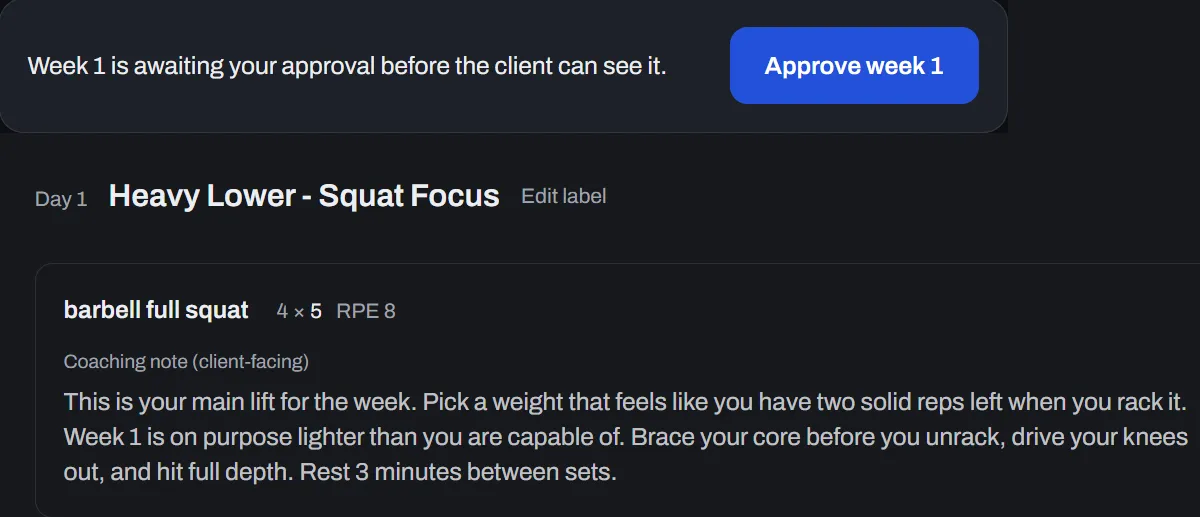
Wolvec is an AI platform for fitness coaches and online personal trainers, the whole coaching setup rather than an add-on to it. Your AI is built from one conversation about how you coach, so you can start without a content library. Your AI drafts each program week based on how you coach and the client's intake, and you approve the week before the client sees it. Depending on the chat level you choose, your AI can answer routine questions based on how you coach, draft a reply for you to review, or stay off. The catalog comes with animated demos and step-by-step instructions, so you are not filming or writing them up yourself.
07
Get your first clients
- Start with people who already know you. Current and past clients, and anyone who has asked you for training advice. Tell them what online coaching includes and who it suits.
- Put up one clear page. Say who you coach, what they get and how to start.
- Give people one way to start: an application form, a booking link or a sign-up page. With Wolvec, invite them, have them apply, or let them buy one of your plans on your page.
- Publish useful material where your niche already spends time. Answer real questions, explain how you coach, and show the kind of program you write, under your own name.
- Ask for referrals once a client is settled in and happy with the coaching.
- Track where every inquiry came from, and do more of what works.
For more on this, see How to get clients as a personal trainer.
Frequently asked questions
Do you need a certification to be an online fitness coach?
Certification is not a government license. The BLS describes certification as a credential issued by a non-governmental body, while a license is issued by a government agency and conveys legal authority to work in an occupation. The BLS notes that personal trainers usually must be certified before they begin working with clients. When choosing a general personal-trainer credential, look for an NCCA-accredited or ISO 17024-compliant certification.
Do I need in-person training experience before coaching online?
It helps. Coaching people in person teaches you to correct technique, read effort and adjust a session as it happens, which is harder to learn over video. If you have little experience, start with a small number of clients you can also see in person or on video calls, and grow from there.
Can an online fitness coach give nutrition advice?
Personal trainers can generally provide general nutrition education related to training and healthy eating within their qualifications. Medical nutrition therapy or individualized treatment of a medical condition is outside an ordinary personal trainer’s scope unless the trainer is separately qualified and legally authorized to provide it. State laws vary, so check the rules where you provide services and where the client is located when you provide them.
Can I keep training clients in person?
Yes. Many coaches run hybrid coaching: in-person sessions plus online programming and check-ins between them.
Do I need videos, a course or a program library first?
Not with Wolvec. Your AI is set up from one guided conversation about how you program, progress people and talk to clients. If you have documents or programs, you can add them, but you can start without a content library.
Sources
- US Bureau of Labor Statistics: Fitness Trainers and Instructors
- US Bureau of Labor Statistics: Certifications and licenses
- USREPS: Credentials
- NSCA: Personal trainers and nutrition advice
- ACE: How to train a client with chronic injuries
- HealthLink BC: PAR-Q+ and ePARmed-X+
- US Small Business Administration: Choose a business structure
- US Small Business Administration: 5 ways to separate your personal and business finances